


The first practices similar to modern insurance are found in Babylon approximately 4,000 years ago. In Babylon, which was the trade center of the time, capitalists who lent money to caravan merchants would cancel the merchants’ debts if the caravans were robbed or faced ransom demands. In return, when they collected the debt back from the merchants, they received a sum over the principal debt amount as compensation for the risk they carried. This practice was later legalized by King Hammurabi. The most significant feature of the Code of Hammurabi was that it mandated the sharing of losses from bandit attacks among all other caravans. This stands as the first example of risk sharing in land transportation.
Today, insurance can be described as a financial tool used to compensate for losses that may occur as a result of realized risks. The premiums to be paid for this service decrease progressively with factors such as keeping risks at minimum levels and continuity.
However, can a vehicle without brakes be insured? Any insurance company you ask would give a clear negative answer. Because if a vehicle without brakes goes out into traffic, an accident is inevitable, and the damage it would cause to third parties would be even worse.
In light of this data, how is it possible that industrial production machinery is insured without surge suppressors, which act as the “brakes” of electricity? While 100% of enterprises use circuit breakers for current—one of the two basic elements of electricity—in case of excess or short circuits, nearly 95% do not use surge suppressors to prevent voltage excesses.
In the insurance system, specifically in machinery breakdown insurance, the burning out of electronic boards is accepted as a likely event. Discounts are applied to policies when products like regulators—which are necessary for continuous high or low voltage—are used. However, this still leads to production losses for the industrialist due to burnt boards and causes the insurance system to pay for damages.
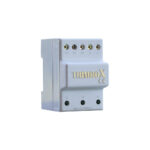
Instantaneous overvoltages (peaks), which are the primary cause of electronic board burnouts—a bleeding wound in industry—can be completely prevented. With its ease of application and price advantage (costing nearly as much as a single service call), businesses using Trimbox surge suppressors enjoy comfortable production. Furthermore, as losses are seen to decrease over time, their insurance premiums drop.
With Trimbox surge suppressors, you are safe against all electrical fluctuations and errors, including lightning, transformer explosions, neutral line breaks, application errors, or phase energy entering the neutral and ground lines.
Simple precautions sometimes save lives. The best investment we can make for our family, our business, and our environment is protective measures. With Trimbox and GNDSeries, you can be protected from electricity-related damages and resulting electrical contact fires.
Whatsapp : +90 555 014 24 23